My research focuses on understanding human and non-human primate evolution by examining patterns of evolutionary covariation in the skeleton. While many of my research questions are focused on the evolution of our species, I often include apes and monkeys in my research in order to better contextualize human evolution. I focus on evolutionary biology and biological anthropology, though my research has practical applications beyond these fields: skeletal evolution directly impacts human and animal health and well-being. As a result, my research is also relevant to current questions in evolutionary medicine, medical anthropology, veterinary science, and human and comparative anatomy.
INTEGRATED SKELETAL EVOLUTION IN PRIMATES
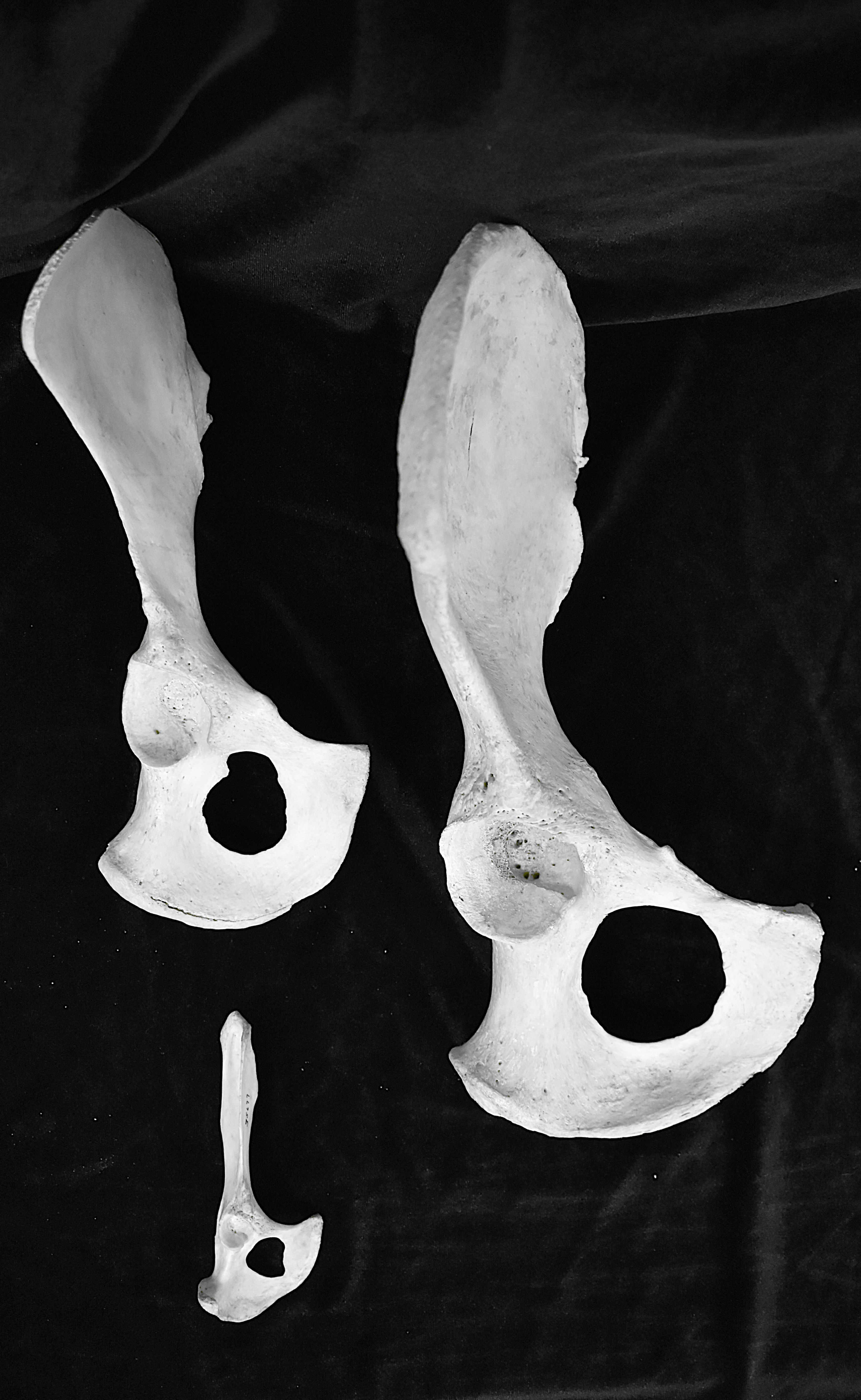
My research on primate evolution focuses on integrating multiple elements of the skeleton, and including both cranial and postcranial elements whenever possible. Some of my ongoing research focuses on how childbirth and/or differences in locomotor patterns may be driving the evolution of the skeleton in both human and non-human primates. By incorporating multiple skeletal regions and sampling broadly from the primate family tree, we can both better understand primate evolution broadly and contextualize the evolution of our own species. Current research areas include the effect of birth on the pelvis and cranium in humans and other primates, and how locomotor patterns have shaped limb bone evolution in great apes.
My work on obstetric selection has been generously funded by the National Science Foundation, the Richard Gilder Graduate School Collections Study Grant, the University at Buffalo’s Mark Diamond Research Fund, and the Morris E. and Lucille Opler Dissertation Research Scholarship. Additional support to expand the scope of this project and develop teaching materials for university-level courses has been provided by the Western Washington University PILOT Project Grant Program.
CRANIAL INTEGRATION & ORBITAL EVOLUTION
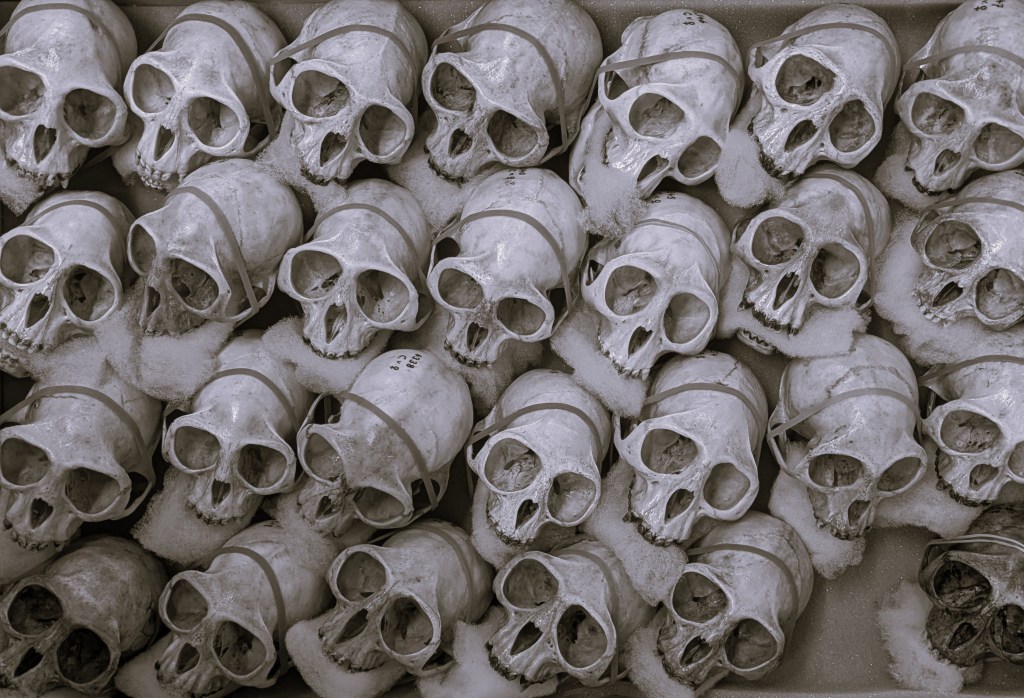
Increasingly forward-facing eyes and increased reliance on vision are considered characteristic of primate evolution. This has been investigated via the skeletal morphology of the cranium, particularly the orbital region and the anterior frontal bone. Additionally, the skeletal morphology surrounding the orbit is important in investigations of human evolution due to the distinct morphology of the frontal bone in hominins. However, the eyes and their surrounding skeletal scaffolding are situated near other highly important biological structures, the masticatory region, the nasal region, and the forebrain, all of which may influence (or be influenced by) the evolution of the orbit. This relationship may also affect the size, shape, and positioning of the face relative to the braincase – traits important to both hominin and papionin evolution.
My postdoctoral work in the Primate Evolution Lab at Western Washington University focuses on analyzing how the morphology of the orbit covaries with other regions of the cranium and how this region may impact overall cranial evolution and patterns of cranial integration across catarrhine primates. This work is funded by the National Science Foundation (PIs Dr. Tesla Monson and Dr. Marianne Brasil).
EVOLUTIONARY PROCESSES OVER ONTOGENY
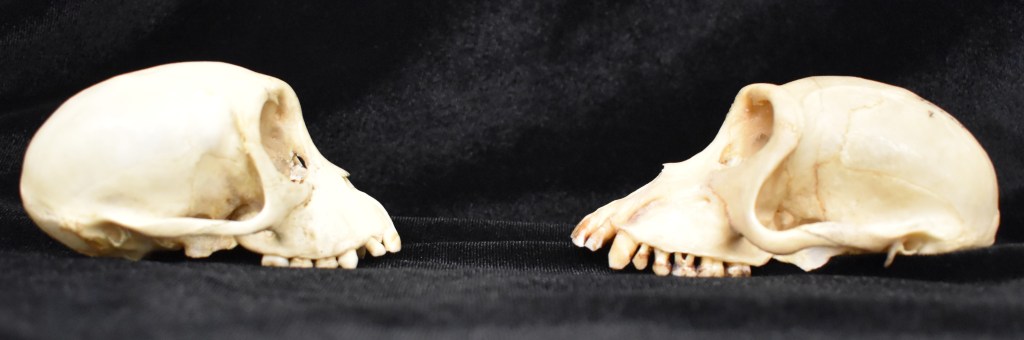
While methods from evolutionary quantitative genetics are increasingly applied in biological anthropology to better understand how evolution has shaped the primate skeleton, these investigations are typically restricted to adult morphology. This limits our understanding of how changing evolutionary processes affecting primates across ontogeny (growth) may impact adult morphology. Preliminary research has indicated that strong stabilizing selection characterizes the early non-human hominid cranium, while neutral evolutionary processes better characterize the adult cranium in each module. Future research will both expand taxonomic representation and explore different methods of testing evolutionary constraint and flexibility in primates across different age stages to better understand how the combined forces of evolutionary pressures and ontogenetic patterns combine to influence the adult skeleton.
SAMPLE COMPOSITION, DATA STANDARDIZATION, & THEIR IMPACT ON MORPHOMETRIC ANALYSES

How biological samples are chosen and how data is collected, standardized, and analyzed is an ongoing, important topic of conversation in evolutionary biology and anthropology. Minor changes in sample construction or data transformation can create mathematical artifacts that may lead even the most careful researcher to misleading conclusions. In an effort to better understand how these choices may affect the outcome of research, I test different sample compositions and methodological choices to better understand the impact these factors have on patterns of trait covariance. A recent project on size adjustment methods on evolutionary quantitative genetics analyses, is under review at the American Journal of Biological Anthropology. I am also currently working with Hannah Oliver, a PhD student at the Buffalo Human Evolutionary Morphology Lab, to examine how morphological differences between captive and wild Macaca fascicularis – likely arising from differences in environmental rather than genetic factors – may affect research reliant on variance-covariance matrices.
 MARIANNE J. COOPER, Ph.D.